DIY energy education • practical planning

Understand the Energy Revolution System Before You Start

Explore what this downloadable DIY guide is designed to teach, how to evaluate its ideas responsibly, what tools and safety checks may be involved, and how it compares with established home-energy options. This page focuses on informed decisions—not exaggerated promises.

✓ Instant digital access format ✓ Beginner-focused explanations ✓ Safety-first evaluation
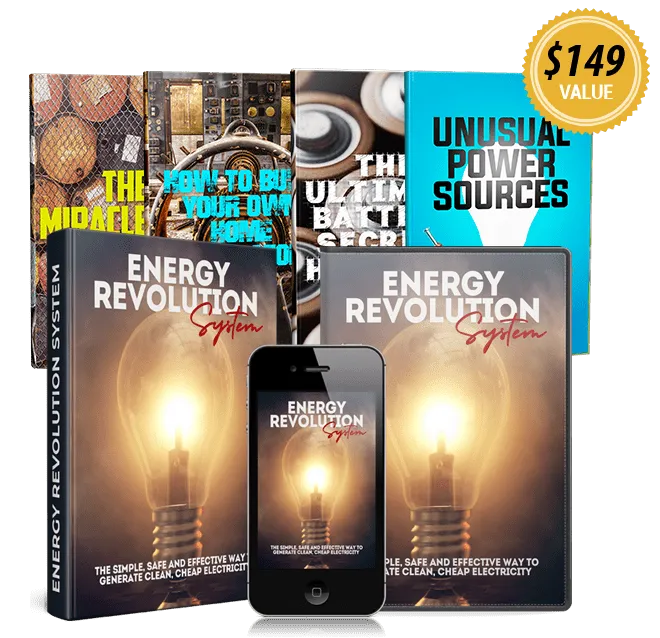
Energy Revolution System guide displayed as digital books, tablet and phone
Start with knowledge Understand voltage, current, loads, batteries, wiring and safe testing before assembly.
Keep expectations realistic Savings depend on actual output, local energy rates, equipment cost and household demand.

Quick Answer: What Is the Energy Revolution System?

The Energy Revolution System is marketed as a downloadable instructional package for people interested in building and learning about a compact DIY energy device. The material emphasizes simple components, step-by-step assembly and a Tesla-inspired bifilar coil concept. Treat it as an educational project: confirm every electrical claim with measurements, follow local codes and never assume that a small experimental unit can safely power an entire home.

Check Official Details
Clear product overview

A More Practical Look at the Energy Revolution System

Rising utility costs, frequent outages and interest in self-reliance have encouraged many homeowners to explore backup power, efficiency upgrades and small-scale energy projects. The Energy Revolution System enters that conversation as a digital DIY guide. Its appeal is not that it replaces professional electrical engineering, but that it gives curious readers a structured starting point for understanding components, assembly and basic energy concepts.

📘

Educational Format

The main product is presented as digital information rather than a preassembled generator. That distinction matters. You are buying instructions, diagrams and supporting material, while the physical components, tools, testing equipment and any professional assistance remain separate considerations.

🛠️

DIY Project Focus

The guide is aimed at people who enjoy building, testing and learning. A beginner may appreciate a clear sequence, but patience is still essential. Small wiring mistakes, incorrect polarity, inadequate insulation or mismatched components can produce unreliable results or create a hazard.

📏

Measurement Matters

Any energy claim should be evaluated with repeatable measurements. Input power, output power, battery state, heat losses and operating time must all be included. A bright bulb or spinning motor alone does not prove that a device produces more energy than it consumes.

Important expectation: The reference website promotes substantial savings, but no individual result should be treated as guaranteed. Utility savings vary with energy consumption, local rates, device performance, component quality and how safely the project is integrated into a real household setup.
Illustration showing off-grid living, solar panels, wind turbines, a portable power unit and energy planning
What the package is meant to provide

What You Should Expect Inside a DIY Energy Guide

A useful instructional package should do more than show a finished device. It should explain the purpose of each part, list specifications, show wiring clearly, identify likely mistakes and describe how to test the system in stages. The Energy Revolution System is promoted as a step-by-step digital resource with a main manual and several bonus guides. Before buying, verify the current list of included files on the official checkout page because bonuses and offer terms can change.

  • Core assembly instructions: a logical sequence that lets you build and verify one section at a time.
  • Materials and tools: a realistic list that includes connectors, protective devices and measuring instruments—not only the headline components.
  • Diagrams and troubleshooting: visual guidance for identifying wiring errors, poor connections, overheating or unexpected readings.
  • Supporting energy information: background on household loads, emergency planning and other ways to reduce dependence on the grid.
How the concept should be understood

The Bifilar Coil Idea—Without the “Free Energy” Confusion

The Energy Revolution System references a Tesla-inspired bifilar coil. A bifilar winding generally uses two closely positioned conductors wound together or arranged in a deliberate pattern. Different configurations can alter inductance, capacitance, voltage distribution and electromagnetic behavior. Those properties can be useful in experiments and electrical designs, but they do not cancel the laws of physics.

What a coil can genuinely do

A coil can store energy temporarily in a magnetic field, oppose changes in current, transfer energy between circuits and interact with capacitors to create resonant behavior. In a practical circuit, engineers may use winding geometry to improve a specific characteristic such as coupling, voltage distribution, noise reduction or frequency response. These are real and measurable electrical effects.

However, useful electrical behavior is not the same as creating energy. Every real conductor has resistance. Magnetic materials have losses. Switching devices generate heat. Batteries lose energy during charging and discharging. An honest experiment accounts for those losses and compares total input energy with total usable output over a meaningful period.

What the guide cannot guarantee

No coil arrangement can legally or scientifically guarantee endless power without an energy source. If a system uses a battery, solar panel, mechanical input or wall supply, that source must be included in the energy calculation. If the battery voltage falls during operation, the battery is contributing energy even when the device appears to be powering itself.

The safest mindset is to treat the project as a learning platform. Measure voltage and current at every input and output. Track run time. Note temperature changes. Repeat tests under the same load. This approach protects you from misleading conclusions and helps you understand whether a design is efficient, inefficient or simply transferring stored energy from one component to another.

A responsible building process

How to Use the Energy Revolution System Guide Step by Step

The best way to approach a DIY energy project is to divide it into learning, sourcing, low-risk assembly, measurement and review. Do not jump directly from a digital diagram to a household electrical panel. A small experimental circuit belongs on a protected workbench until its behavior is understood and independently checked.

Read the full manual before purchasing components

Review the complete instructions once from beginning to end. Highlight the power source, expected voltage, expected current, component ratings, wire sizes and protective devices. Create a separate list of anything that is unclear. This first reading helps prevent wasted purchases and reveals whether the project fits your current skill level.

Create a complete budget and parts checklist

Include copper wire, connectors, terminals, switches, fuses, insulation, enclosures, a multimeter and any battery or inverter equipment. Add shipping, replacement parts and optional professional review. A project that looks inexpensive in a simplified list can cost more once safe connectors, test equipment and protection are included.

Build only the smallest test section first

Start with a low-voltage section that can be powered by a current-limited supply or an appropriately protected battery. Confirm continuity, resistance and polarity before energizing it. Keep loose metal tools away from battery terminals, and place the project on a nonflammable, uncluttered surface with good ventilation.

Measure input and output under a defined load

Record voltage and current at the same time. Use a known load rather than relying on visual brightness. For changing signals, basic meters may not capture the full waveform, so advanced evaluation may require an oscilloscope and suitable current measurement. Keep a written test log instead of relying on memory.

Ask a qualified electrician before any household connection

A workbench experiment must never be connected directly to branch circuits, outlets, service panels or utility wiring without approved equipment and professional review. Improper backfeeding can energize lines that workers expect to be dead. Household integration may require listed transfer equipment, grounding, permits and inspection.

Compare the outcome with simpler alternatives

If the goal is lower bills, compare the project with air sealing, efficient lighting, appliance controls, insulation, a home energy audit or a properly designed solar system. If the goal is outage preparedness, compare it with a certified power station, generator or battery backup. The best option is the one that provides safe, measurable value for your actual need.

Benefits and limitations

Why People Explore This Type of DIY Energy Project

A digital guide can be worthwhile even when the finished project does not replace utility power. The learning process itself can improve energy awareness, basic electrical literacy and emergency planning. The key is to separate those realistic benefits from claims that require independent proof.

🧠

Builds Practical Knowledge

Following a structured project can introduce resistance, voltage drop, magnetic fields, switching, batteries, loads and efficiency. These concepts are useful when comparing power stations, solar kits, inverters and household energy upgrades. Learning to measure rather than guess is a valuable skill.

🔋

Encourages Backup Planning

Thinking about energy independence naturally leads to questions about which appliances are essential, how much power they consume and how long a battery might support them. That planning can improve outage readiness even if the final solution includes certified commercial equipment.

♻️

Promotes Energy Awareness

A project can motivate users to identify wasted electricity, standby loads and inefficient habits. Often, the fastest savings come from reducing consumption before adding generation. Monitoring plugs, efficient lighting, scheduling and insulation can support the same financial goal.

🧰

Offers a Structured Hobby Project

People who enjoy electronics may value having a defined build rather than collecting disconnected videos and diagrams. A structured manual can reduce confusion, provided it clearly labels risks and does not encourage unsafe household connections.

⚖️

Supports Better Comparisons

Once you calculate load, run time, efficiency and component cost, you can compare DIY ideas with solar panels, batteries, generators and energy-efficiency upgrades on equal terms. That makes purchasing decisions less emotional and more evidence-based.

🚧

Still Has Clear Limits

A digital manual cannot guarantee performance, code compliance, component availability or a specific utility saving. Results depend on the builder, design quality, source energy, load and measurement method. Safety and independent verification remain the user’s responsibility.

Option comparison

Energy Revolution System vs. Common Home-Energy Alternatives

The right solution depends on your goal. A DIY guide may suit education and experimentation, while a certified battery system may be better for immediate backup power. Solar may support long-term generation, and efficiency upgrades may deliver the fastest reduction in consumption. Compare the complete cost, not only the initial purchase.

Option Best For Upfront Effort Key Advantage Main Limitation
Energy Revolution System guide DIY learning, experimentation and energy planning Moderate to high because you source, assemble and test parts Structured educational project with digital access Performance and savings are not guaranteed; household integration requires professional review
Home energy audit Finding waste and prioritizing improvements Low to moderate Can identify practical savings without building a generator Does not provide backup power during an outage
Portable power station Temporary backup for selected devices Low Certified, ready-to-use equipment with published capacity Limited run time; must be recharged and sized correctly
Fuel generator Higher-power emergency backup Moderate Can support larger loads when properly sized Noise, fuel storage, maintenance and carbon-monoxide risk
Solar plus battery Long-term renewable generation and backup High Established technology with measurable production Higher cost, permitting, site limitations and installation complexity
Efficiency upgrades Reducing monthly consumption Low to high, depending on the upgrade Often delivers predictable savings without generation equipment Some improvements, such as insulation or HVAC replacement, can be expensive
Non-negotiable safety guidance

Electrical Safety Comes Before Savings

A low-voltage project can still create burns, sparks, battery fires or damaged equipment. High-current batteries are especially capable of releasing a large amount of energy through a short circuit. Use correctly rated fuses close to the energy source, insulated terminals, secure enclosures and conductors sized for the expected current.

Never work on energized wiring. Remove jewelry, use insulated tools where appropriate and keep a suitable fire extinguisher accessible. Rechargeable batteries must be used with compatible charging equipment and should not be charged unattended in an improvised enclosure. Any swelling, unusual heat, odor, smoke or discoloration is a reason to disconnect power safely and stop testing.

Household electrical systems are a separate level of risk. Do not insert improvised power into a wall outlet, also known as backfeeding. Do not connect an experimental device to a breaker panel. Do not attempt to create a transfer arrangement from extension cords. Grid interaction requires approved inverters, transfer equipment, grounding, overcurrent protection and compliance with local rules.

Professional review is essential whenever a project may interact with household circuits, an inverter, a large battery bank, a generator inlet or utility power. This page is educational and is not a substitute for an electrician, engineer, permit authority or product manual.

Never backfeed the grid

Improvised backfeeding can endanger utility workers, neighbors and your own equipment. Use only approved transfer equipment installed according to local requirements.

Fuse the source

Protective devices should be selected for the conductor and circuit. A fuse placed near a battery terminal can limit damage from a downstream short.

Control heat

Warm wires, connectors or switching devices may indicate excessive current, poor contact or inadequate sizing. Stop and inspect rather than continuing the test.

Use proper enclosures

Exposed terminals and moving parts should be protected from accidental contact, moisture, conductive debris, children and pets.

Test one change at a time

Changing several components together makes troubleshooting difficult. Document each modification and repeat the same measurements.

Respect component ratings

Voltage, current, temperature and duty-cycle limits are not suggestions. Underrated parts can fail suddenly and unpredictably.
Who it may suit

Is the Energy Revolution System Right for You?

It may be a reasonable fit when…

  • You enjoy hands-on learning and are willing to read the full guide before building.
  • You understand that the purchase is primarily digital information, not a finished generator.
  • You are prepared to buy parts separately and include test equipment and safety components in your budget.
  • You will evaluate performance through measured input, measured output and repeatable tests.
  • You are comfortable asking a qualified professional for help before connecting higher-power equipment.

Choose another option when…

  • ×You need a certified backup system that works immediately without assembly or testing.
  • ×You expect guaranteed bill reductions or a device that creates energy without a measurable source.
  • ×You plan to connect an experimental build directly to your home wiring without permits or professional review.
  • ×You do not have a safe workspace away from children, moisture and combustible materials.
  • ×Your main goal is immediate financial savings that may be better served by an energy audit or efficiency upgrade.
60-day money-back guarantee badge
Purchase protection

Review the Current Refund Terms Before Checkout

The reference website advertises a 60-day money-back guarantee. Refund eligibility, contact procedures, processing time and exclusions can change, so read the current terms on the official checkout and save a copy of your receipt. A guarantee protects the purchase price under stated conditions; it does not reimburse tools, parts, installation work or third-party services.

Review Official Offer & Terms
Frequently asked questions

Energy Revolution System FAQ

These answers are designed to clarify what the guide is, what it is not and how to approach it responsibly.

What exactly do I receive?

The product is presented as a digital instructional package, typically including a main manual and bonus educational material. It is not the same as receiving a fully assembled, certified generator. Confirm the exact files, delivery method and current bonuses on the official purchase page.

Can the system reduce my electricity bill?

A household bill falls only when grid consumption is measurably reduced. Whether a DIY project achieves that depends on its real output, operating time, efficiency, component cost and the loads it supports. Marketing figures should not be treated as guaranteed personal results.

Does a Tesla-style bifilar coil create unlimited energy?

No. A bifilar winding can change electrical properties such as inductance, coupling, capacitance or voltage distribution, depending on how it is connected. It cannot create energy from nothing. Any claimed output must be compared with the complete input and stored energy in the system.

Do I need electrical experience?

Basic low-voltage experiments may be accessible to patient beginners, but safe work still requires understanding polarity, current, resistance, fusing, battery hazards and measurement. Higher voltage, household wiring, large batteries and inverter installations require qualified professional support.

Can I connect the project to my home electrical panel?

Not as an improvised experiment. A household connection can expose people and property to shock, fire and dangerous backfeeding. Grid-connected or backup systems generally require approved equipment, correct transfer arrangements, grounding, permits and inspection. Consult a licensed electrician and local authority.

Is there a money-back guarantee?

The reference website currently promotes a 60-day refund period. The official terms at the time of purchase control eligibility. Read those terms carefully, keep your receipt and note whether any refund request must be submitted through a particular support portal.

Where should I purchase the Energy Revolution System?

Use the official website buttons on this page so you can review the latest product description, current price, bonuses, checkout provider and refund terms. Avoid assuming that unrelated third-party listings contain the same files or protections.

Make an informed decision

Explore the Official Energy Revolution System Package

Review the current guide contents, access method, pricing, bonuses and refund terms directly on the official website. Approach the project as an educational DIY resource, use measurements instead of assumptions, and involve a qualified professional before any household electrical integration.

Go to the Official Website →
View Official Access →